MOGADISHU, Somalia — August 30, 2026 — Somalia’s federal government and the African Union are intensifying efforts to secure funding for foreign troops operating in southern Somalia, including through possible bilateral agreements and financial support from Arab governments, officials familiar with the negotiations said.
The funding discussions are taking place ahead of expected talks on Somalia at the United Nations Security Council in New York, as Mogadishu and the African Union seek a sustainable arrangement for the African Union Support and Stabilization Mission in Somalia, known as AUSSOM.
According to officials familiar with the negotiations, one proposal would divide the foreign troop presence into two separate arrangements.
Under the first, Somalia would negotiate bilateral security agreements with neighbouring troop-contributing countries. Those agreements could allow some foreign soldiers to remain in Somalia outside AUSSOM’s formal command and financing structure.
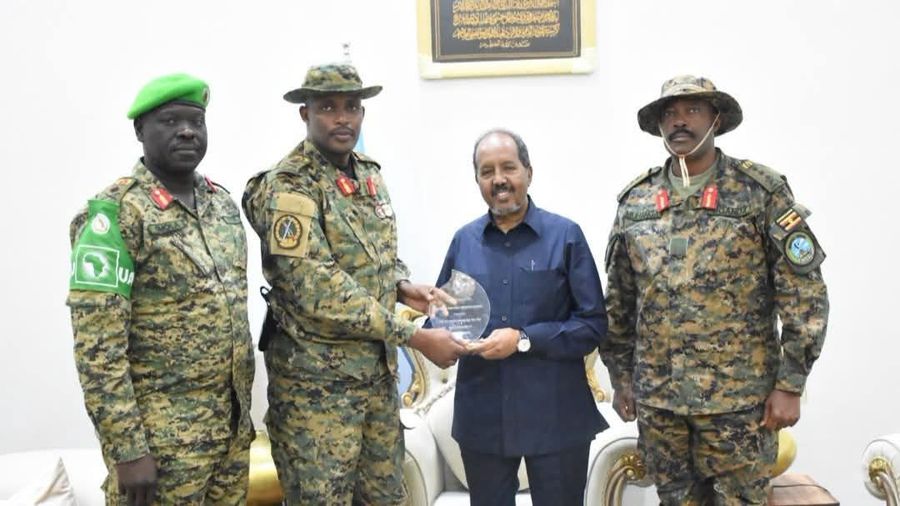
A separate arrangement is reportedly being explored for Ugandan troops stationed in Mogadishu, particularly those responsible for security around the heavily fortified Halane compound.
Halane is one of Somalia’s most sensitive security zones. The compound is located near Aden Adde International Airport and houses United Nations offices, foreign diplomatic missions, African Union facilities and several international organisations.
Officials said the Somali government had informed Uganda that funding could be available to maintain its military deployment for an additional year. Neither Mogadishu nor Kampala has publicly disclosed the proposed arrangement’s cost, duration, troop strength or operational terms.
Somalia and Uganda have also not confirmed whether the proposed deployment would remain under AUSSOM or operate through a separate bilateral agreement.
Somalia Seeks Arab Funding
Somali and African Union representatives have approached several Arab governments seeking financial assistance for the foreign troop deployment, according to officials briefed on the discussions.
The responses received so far have reportedly fallen short of the firm commitments required to sustain the mission. Somali delegations sent to Arab capitals are continuing negotiations, while some teams that returned in recent weeks secured limited pledges but no comprehensive financing package.
The governments approached by Somalia have not publicly announced final commitments. The Somali government and African Union have also not released details about the amount being requested or how any Arab funding would be managed.
The search for new donors reflects persistent concern about AUSSOM’s financial position. Somali and African Union officials have repeatedly warned that unpredictable funding could affect troop payments, military operations and the gradual transfer of security responsibilities to Somali institutions.
In November 2025, African Union and United Nations leaders described AUSSOM’s financial situation as dire and called for predictable and sustainable support for the mission. The United Nations Security Council later extended AUSSOM’s authorization until December 31, 2026. African Union–United Nations communiqué
AUSSOM replaced the African Union Transition Mission in Somalia, or ATMIS, at the beginning of 2025. It was established to assist Somali forces in combating Al-Shabaab, protect strategic population centres and support the transfer of national security responsibilities.
Its deployment followed years of phased reductions in African Union troop numbers as Somalia sought to take greater control of its security.
President Hassan Sheikh Mohamud said in October 2022 that the final foreign troops were expected to leave Somalia by December 2024. That deadline passed without a complete withdrawal, as the federal government and its international partners concluded that continuing security threats required an extended foreign military presence.
The federal government now says AUSSOM remains necessary while Somalia rebuilds its national forces and works to contain Al-Shabaab. Officials have discussed the possibility of maintaining international security support until 2028, although no complete public plan covering that period has been released.
The mission remains especially important in southern and central Somalia, where Al-Shabaab continues to carry out attacks and contest control of rural territory.
Somali government forces and allied clan militias captured several areas from the group during an offensive that began in 2022. Al-Shabaab later regained some locations after government forces withdrew or struggled to maintain supply routes and permanent defensive positions.
Those reversals have raised questions about the Somali security forces’ ability to hold recovered territory without sustained logistical, financial and military assistance.