Whoever Holds the Burhakaba Road Sets Baidoa’s Price of Rice
**By Ismail Abukar**
29 October 2026
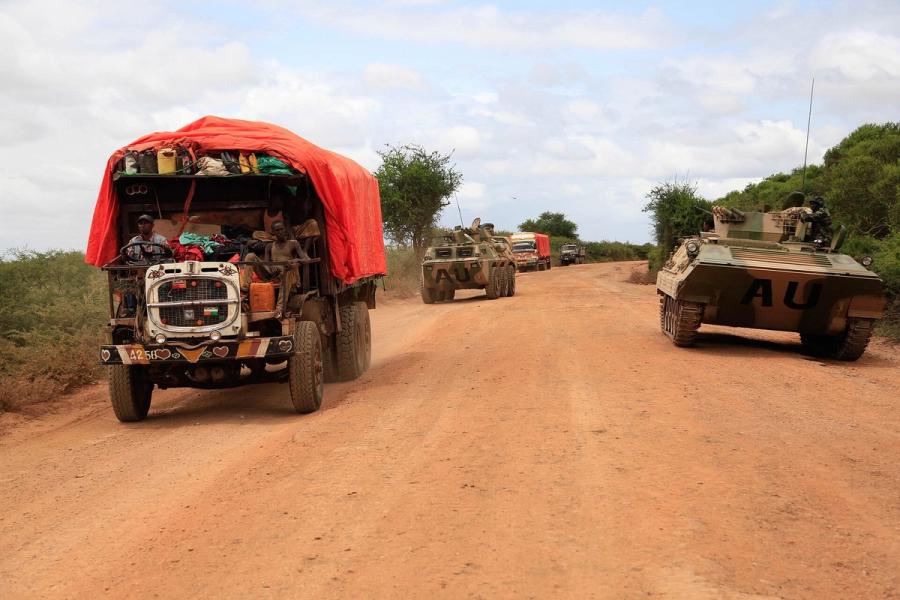
I travelled these roads a long time ago, in 2006 and 2007. I have never travelled them since Al-Shabaab took control of those areas. I travelled from Lower Shabelle to Baidoa, and then to Beled Hawo. Militias controlled that area, and there were checkpoints where passenger cars, buses and trucks carrying goods paid money to the militias. In those days you knew what to expect. You knew there were no minefields. It was only militias that you had to pay to pass.
The road itself was a scary road, with a lot of holes. Because of the civil war, the road was not maintained, and the rain made it even worse. Drivers of passenger cars or trucks with goods had to steer off the road to avoid those giant holes, and then come back to it, and then do the same thing again. When it rained heavily, the road was not usable, and drivers had to find alternative routes. Sometimes they just got stuck in the mud.
Between Afgooye and Baidoa there were so many checkpoints. I still remember one. The militias were sitting on the side of the road under a tree they had made into a shelter, with something on top to cover the sun. Whenever they saw a car approaching from either side, they approached the road with their guns. It was intimidating to see. Sometimes you did not even know whether they wanted money or wanted to kill people for clan revenge, which is a big thing in Somalia: [blood debt](https://hornobserver.com/articles/3737/The-Anatomy-of-a-Blood-Debt-How-Clan-Revenge-Killings-are-Fracturing-Somalias-Frontlines).
Now the road has mines. On 20 October a passenger vehicle bound from Mogadishu to Baidoa [hit a mine](https://www.riotimesonline.com/somalia-landmines-hit-two-vehicles-lower-shabelle-2026/) between Waraaboole and Doonka. A local resident told Shabelle TV that the vehicle was destroyed and only the driver and one woman survived. [No group claimed the blast and no official commented](https://thesomalidigest.com/baledogle-buurhakaba-federal-column/), Somali Digest reported. Six days later the army column sent to reopen the same road was ambushed near Jameeca, and dozens of army vehicles were [seen retreating toward Baledogle airbase](https://www.somaliguardian.com/news/somalia-news/somali-army-convoy-ambushed-al-shabaab-deadliest-attack/), Somali Guardian reported. The defence ministry [says the operation, called Operation Banooda, will continue](https://kulu-media.com/somalia-army-losses-rise-after-al-shabaab-attack/). The army will count its losses in soldiers and vehicles. In Baidoa, the count is made in kilos of rice.
I can only imagine the people travelling on this same road in the Al-Shabaab era, from when Al-Shabaab rose to today. Now they do not only have to worry about militias popping up from nowhere and asking for money to pass. I found no report of any rebuilding between Afgooye and Baidoa, so in my analysis that road is likely still the same, or worse. On top of all that struggle, there are mines, and they do not know who placed them or why. If you go off the road, there are mines. If you stay on the road, there are mines. Somalis say a road like this is like crossing the sirat, the narrow bridge over Hellfire that, in Muslim belief, every soul must cross.
The blood debt is there, and Al-Shabaab also runs its shadow courts, its prisons and its executions. The EU Agency for Asylum’s country guidance [says Al-Shabaab treats spying for the government as a crime punishable by death](https://euaa.europa.eu/country-guidance-somalia/314-civilians-perceived-spies-al-shabaab) and that it has executed civilians and businesspeople accused of it, mostly in public. In my analysis, a passenger in a taxi or a passenger bus going from Mogadishu to Baidoa, or to Beled Hawo, could be targeted at an Al-Shabaab checkpoint. The same goes for someone who works for the federal government or the South West State government. Anyone with ties to the government has that fear of being taken out of the car and killed.
The government controls areas, and travellers have to pay money. In my analysis, the mines can cause death and injury on a road that nobody controls 100 percent, and finding help could take long, because the closest city is far from the people who are injured. Al-Shabaab also controls parts of the road, and now the army of Abdiaziz Laftagareen, the former South West State president, says it controls parts of it too. That is a lot of problems on one road, and in my analysis the people on it risk dying from the mines, from Al-Shabaab, from the government and from Laftagareen’s forces. And who suffers most? The communities that rely on it for their daily survival.
My argument is that whoever holds a stretch of this road has two powers over Baidoa: a toll booth over what its food costs to bring in, and a veto over whether it arrives at all. The toll is a steady charge. The veto is what breaks the market. Both are paid in the end by families in Baidoa, who have no say in who holds the road.
## The toll and the veto
The road has been a toll road for years. A 2023 study of the Baidoa corridor by researcher Abdirahman Ali, published by the Rift Valley Institute, [counted 25 checkpoints](https://www.xcept-research.org/wp-content/uploads/2023/10/Brokering-Trade-Routes_Final.pdf) between Mogadishu and Beled Hawo and found that checkpoint taxes weigh more heavily on transport costs than fuel prices, road conditions or distance. Two belonged to Al-Shabaab. One of them, at Jameeca, is on the border between Lower Shabelle and the Bay region, [the area where the 26 October ambush took place](https://www.somaliguardian.com/news/somalia-news/somali-army-convoy-ambushed-al-shabaab-deadliest-attack/). In fieldwork in late 2022, a truck travelling from Mogadishu to Baidoa paid $2,400 to Al-Shabaab at Jameeca and a combined $1,900 at checkpoints in government-controlled areas. The study’s own figures for the Al-Shabaab fee vary by a few hundred dollars, and it warns that checkpoints change with the fighting.
Peer Schouten’s companion study, also published by the institute, [found](https://pure.diis.dk/ws/files/23114709/Paying_the_Price_Final-DIIS-2.pdf) that transporters and traders pass checkpoint costs on to the consumers who buy at the market, and put the average on the Mogadishu–Beled Hawo route at $69 a tonne. By my arithmetic, that is about 7 cents for each kilo carried from Mogadishu to Beled Hawo.
Burhakaba is the newest claim on the road. Garowe Online noted that the town sits on the main road between Mogadishu and Baidoa and that control of it [“could affect the movement of security forces, commercial transport and supplies along the route.”](https://www.garoweonline.com/en/news/somalia/somalia-laftagareen-s-forces-expand-territorial-gains-in-southwest-as-buurhakaba-falls) Forces loyal to Laftagareen [said on 15 October that they had taken it](https://somaliatoday.com/security/somalia-laftagareen-forces-claim-key-town-of-burhakaba-2026-10-15/), though the report said it was unclear whether they controlled the whole town.
That raises the first question: who will run the checkpoints on a road the army reopens? In my analysis, reopening by force changes who collects, not whether anyone does. I found no statement from the defence ministry or the South West State government on who will staff them.
## What a closed road costs Baidoa
The veto is worth more than the toll. When Al-Shabaab cut the road for a week in July 2023, trucks from Mogadishu were stranded and a trader who restocks through Afgooye [told Voice of America](https://www.voanews.com/a/al-shabab-imposes-blockade-on-baidoa-town-in-somalia-/7185165.html) his stock was nearly gone and he might have to close. In December 2023, after floods cut the road, a displaced father in Baidoa [told Radio Ergo](https://radioergo.org/en/2023/12/baidoa-idp-families-on-one-meal-a-day-as-flood-damages-push-food-prices-sky-high/) that a kilo of rice had gone from 60 cents to $2.50 and a kilo of flour from 60 cents to $1.50. The figures come from different years and sources, but in my analysis the difference in size is the point: the checkpoints add cents to a kilo, and, by that account, a closed road added nearly two dollars to a kilo of rice.
This season is worse. In May the famine early warning network FEWS NET [warned of a credible risk of famine](https://fews.net/east-africa/somalia/key-message-update/may-2026) in and around the Bay region and said that acute malnutrition in Burhakaba district, on this same road, had already passed the famine threshold. In September the UN-backed hunger monitor, the Integrated Food Security Phase Classification, projected that about 26,000 displaced people in Baidoa were [likely to face starvation](https://kfgo.com/2026/09/23/thousands-of-displaced-in-southwest-somalia-could-be-in-famine-by-year-end-ipc-says/) between October and December, Reuters reported, and food aid across Somalia was expected to reach 1.3 percent of those in need. In my analysis, when aid reaches so few, the market feeds Baidoa, and the market depends on the road.
The other routes cannot carry that load. The UN Logistics Cluster, the UN-led group that coordinates aid transport, [recorded on 15 September](https://logcluster.org/system/files/2026-10/logistics-clustersomaliamogadishumeeting-minutes-15-09-2026.pdf) that the Dollow–Luuq–Yurkud–Bardale–Baidoa corridor was open to commercial cargo only, and that humanitarian cargo there was “currently not feasible” because of security. Baidoa’s airstrip, in my analysis, can carry medicine but not grain for hundreds of thousands of people.
How long Baidoa could last if the road closes again is a question no one has answered in public. The ministry’s statements I found count militants killed, [more than 70 by its account](https://www.somaliguardian.com/news/somalia-news/somali-army-convoy-ambushed-al-shabaab-deadliest-attack/) of the 26 October fighting. None addresses what the fighting on the road does to prices in Baidoa.
## The mines nobody is clearing
The least visible claimant on the road is whoever buried the mines. [Somali Digest reported](https://thesomalidigest.com/baledogle-buurhakaba-federal-column/) that a mine struck an army convoy near Wanlaweyn on 21 October. Its headline calls the road one that Al-Shabaab has mined, but its text says only “a road said to be mined.” Apart from that headline, no report I reviewed says who placed the mines.
In my analysis, Al-Shabaab is the most likely party, though that is an inference and not a finding. It has taxed traffic on this corridor, and it imposed the week-long blockade of 2023. The EU Agency for Asylum’s 2025 report on Somalia’s security situation, [citing the CTC Sentinel journal](https://euaa.europa.eu/coi/somalia/2025/security-situation/22-south-west/224-south-west-checkpoints-and-road-security), describes the Mogadishu–Baidoa route through Wanlaweyn and Burhakaba as a focus of Al-Shabaab raids and ambushes. Al-Shabaab claimed responsibility for the 26 October ambush. I found no report attributing mines on this road to the army or to Laftagareen’s forces. If Al-Shabaab laid them, they work like the blockade: a way for the group that taxes this road to close it.
The army’s answer was to send a Danab commando unit ahead of its column of more than 200 vehicles on 24 October to [check the road for buried explosives](https://thesomalidigest.com/baledogle-buurhakaba-federal-column/). In my analysis, that is a road cleared for a column. It does nothing for a minibus or a truck of flour that uses the same road a week later, and a mine cannot tell the difference. So who is clearing it for civilian traffic? I found no statement that the Somali Explosive Management Authority, the national mine-action authority, or any other body has been asked to survey this road, and none from the ministry on whether the stretch near Waraaboole, where the passenger vehicle was destroyed, has been swept for mines.
The ministry says Operation Banooda will go on. I found no public answer to four questions: who will staff the checkpoints on it once it reopens, whether the government weighed Baidoa’s food prices before sending more than 200 vehicles up this road, who is sweeping it for the civilians who use it, and what the UN and donors will do if the road that feeds Baidoa’s market is cut again. Until someone with a gun on that road answers, the price of Baidoa’s rice will be set by whoever is collecting, burying mines or fighting there that day, and Baidoa’s families will keep paying it.
I could not independently verify current prices or the condition of the road. The figures in this article come from the reports linked in the text. I sent questions to Baidoa Municipality and to the Somali Explosive Management Authority on 28 October and had not received a reply when I submitted this draft.
*Ismail Abukar is an independent investigative journalist, an editor at The Field and a volunteer editor at Horn Observer. He is Co-founder and Chairperson of the Organization for Prisoners’ Rights in Mogadishu, Somalia, served as Somalia’s Youth Representative to the African Union from 2019 to 2021, and holds an MA in International Law and Human Rights from the University for Peace. His work has been published in African Arguments, Horn Observer, Lawfare, Pambazuka News and the Review of African Political Economy, and cited by Amnesty International, Human Rights Watch and the U.S. State Department. this is an article recieved and will be published baidoa online, add a professional note at the end of the artical, no changes to the artical at all, it should remain the same.*
Editor’s Note: This article is published by Baidoa Online as a contributed analysis. The views and conclusions expressed are those of the author and do not necessarily reflect the editorial position of Baidoa Online.